National Day of Prevention Against Food Waste: data, impacts, and concrete solutions in 2026
From the Green column of Gobid.it, an in-depth look at food waste in Italy and the most effective strategies to reduce it throughout the entire supply chain.
-
 author: Internal Editorial Team
The Green column of Gobid.it was created to address the major issues related to sustainability, the circular economy, and the conscious use of resources. Within this framework falls the National Day of Prevention Against Food Waste, celebrated every year on February 5, which in 2026 more than ever represents an opportunity to reflect on a phenomenon that is still widespread and structural.
Food waste is not only an ethical issue, but also an environmental and economic one. Reducing it means limiting climate impact, enhancing productive resources, and promoting more responsible consumption models.
What is the National Day of Prevention Against Food Waste?
Established in Italy in 2014, the National Day of Prevention Against Food Waste is promoted by the Ministry of the Environment (now MASE) with the support of institutions, universities, and independent observatories. Its goal is to raise awareness among citizens, businesses, and public decision-makers about the urgency of reducing food waste in all its forms.
Over time, February 5 has become a reference date for the dissemination of updated data, information campaigns, and best practices.
Food waste in Italy: updated figures for 2026
According to the latest surveys by the Waste Watcher International Observatory, in 2025 household food waste in Italy amounted to around 75 grams of food per capita per day, with an average annual cost of over €500 per family.
At a global level, FAO data confirm that about one third of the food produced is lost or wasted along the supply chain. This results in:
-
unnecessary consumption of water and land;
-
avoidable greenhouse gas emissions;
-
loss of economic and social value.
Where waste originates: supply chain and behaviors
Food waste does not concern only final consumption. The main critical issues are concentrated in three stages:
Production and processing
Agricultural waste, aesthetic standards imposed by large-scale retail, and logistical inefficiencies generate significant losses already at the upstream level.
Distribution and food service
Errors in demand forecasting, short expiration dates, and oversized portions have a major impact, especially in collective catering.
Household consumption
Unplanned purchases, poor refrigerator management, and limited understanding of labels (best-before date vs. expiration date) remain the main causes.
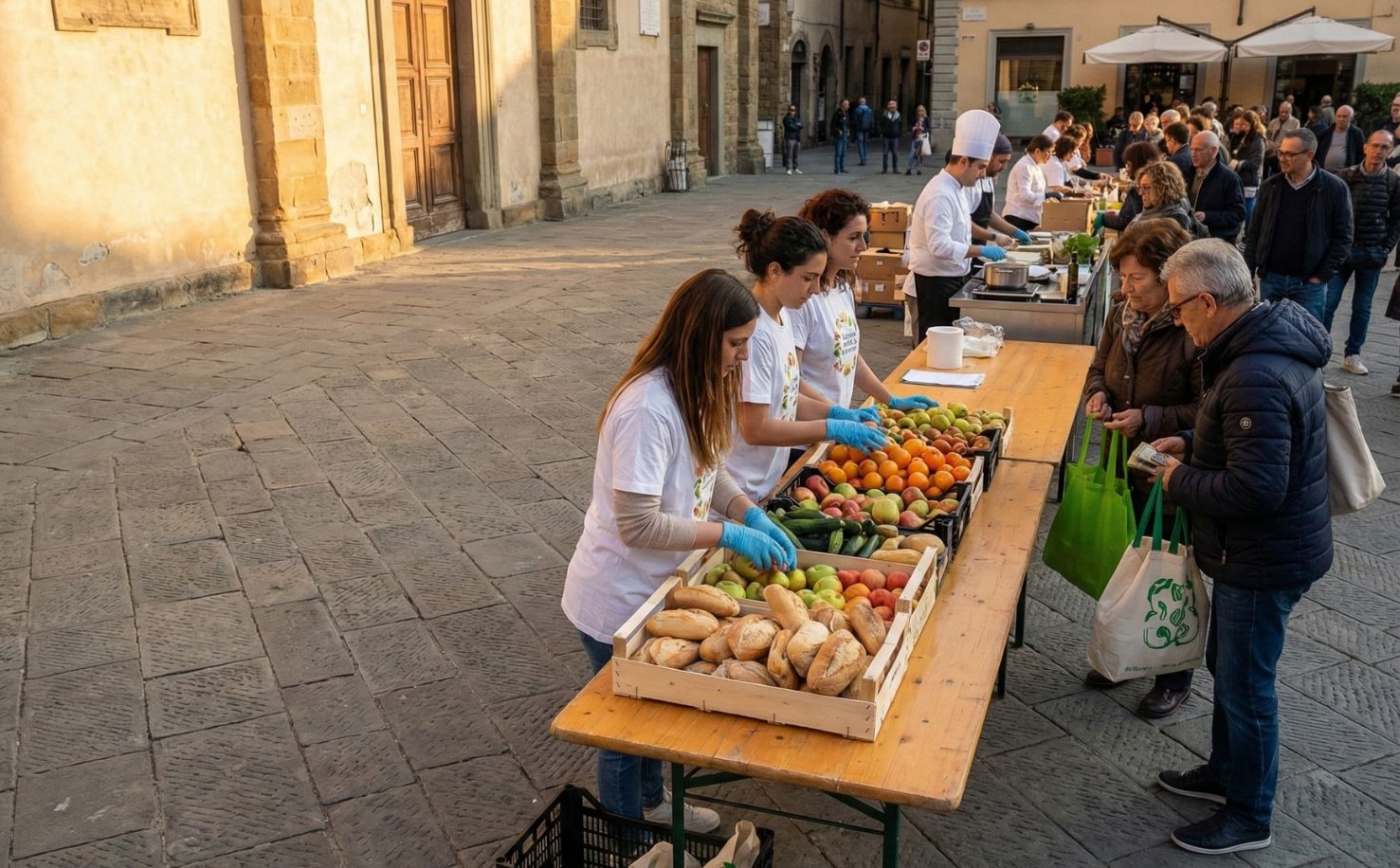
Environmental impact of food waste
Reducing food waste means acting directly on climate change. According to FAO, if food waste were a country, it would be the third largest CO₂ emitter in the world.
Every wasted food product embodies:
-
energy;
-
water;
-
labor;
-
transportation.
From a circular economy perspective, preventing waste is increasingly more effective than simple recycling.
The most effective strategies to reduce waste
In 2026, prevention policies focus on three main levers:
Education and awareness
Information campaigns, school programs, and transparent communication help change everyday behaviors.
Innovation and digitalization
Traceability solutions, smart inventory management, and food recovery platforms are helping to reduce surpluses.
Regulations and incentives
In Italy, the Gadda Law remains a benchmark for the recovery of surplus food, supported by tax measures and simplifications for donations.
Circular economy and the value of food
Preventing food waste is one of the pillars of the green economy. Enhancing the value of food means considering it a resource rather than waste, encouraging more efficient and sustainable production models.
The responsible reuse of goods and equipment in the food sector also helps reduce the overall impact of the system.
Why talk about it today?
The 2026 National Day of Prevention Against Food Waste draws attention to a concrete, measurable, and solvable challenge. Reducing waste does not require sacrifices, but rather greater awareness and informed choices.
Correlated Articles

Renewable Energy and Circular Economy: All the Latest from November 2025
-
author: Internal Editorial Team

Green Deal 2025: What Changes with the New EU Package
-
author: Internal Editorial Team
Internal Editorial Team
Find our news

Get the most out of your assets.
Discover how to transform your
movable assets into financial resources.