A journey among jewels: Pearl Special
Pearls are “living gems”: they do not come from a stone, but from a living organism. Precisely for this reason they have a unique charm and, at the same time, require a more technical approach when it comes to quality, authenticity, treatments, and v
-
 author: Internal Editorial Team
Pearls are “living gems”: they do not come from a stone, but from a living organism. Precisely for this reason they have a unique charm and, at the same time, require a more technical approach when it comes to quality, authenticity, treatments, and value. In this guide you will find a comprehensive overview to help you navigate natural pearls, cultured pearls, imitations, grading criteria, and best storage practices, with references to recognized industry standards and guides.
What makes a pearl different from any other gemstone
Pearls are organic materials formed by a mollusk, so they react to heat, chemicals, and wear more than many mineral gemstones. Unlike diamonds, sapphires, or rubies, a pearl is composed mainly of calcium carbonate (aragonite) and conchiolin, layered into nacre (mother-of-pearl). This “natural composite” explains why maintenance and proper commercial description are central.
From a nomenclature standpoint, the correct distinction between natural pearls, cultured pearls, and imitations is considered essential in international reference guides such as CIBJO’s Pearl Book, which compiles global industry practice and terminology.
Natural, cultured, and imitation pearls: clear differences (without ambiguity)
To distinguish them correctly, you need to know how a pearl is formed and which parts are natural or “induced” by humans. In brief:
-
Natural pearl: formed without human intervention; today it is rare on the contemporary market.
-
Cultured pearl: grown in an “assisted” mollusk through the insertion of a nucleus or graft; the pearl then develops biologically.
-
Imitation: reproduces the aesthetic effect of a pearl, but does not have its typical structure and composition.
This is not merely an “academic” issue: in regulatory terms and for fairness to the consumer, terminology must avoid confusion and must include any treatments that change care requirements and durability. The FTC’s Jewelry Guides, for example, explicitly include natural, cultured, and imitation pearls among the products subject to anti-deception guidance.
What are the main types of cultured pearls (and why value changes)
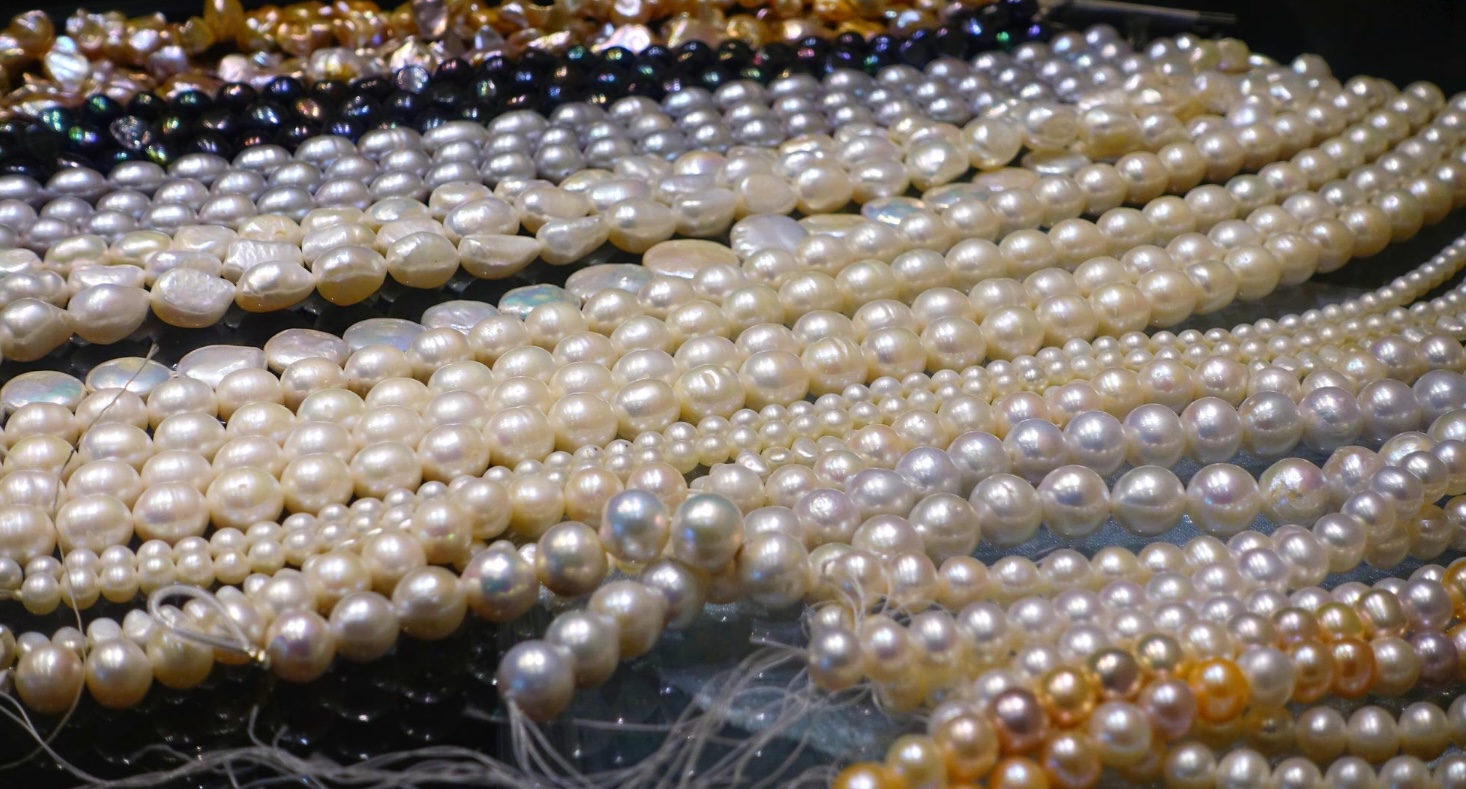
Value varies mainly according to species, environment (saltwater or freshwater), nacre quality, and aesthetic uniformity. In market practice, you will often encounter:
-
Akoya (saltwater): typically smaller, very well known for luster and a “classic” look.
-
South Sea (saltwater): often larger, with white, cream, or golden tones; slower production.
-
Tahitian (saltwater): famous for dark colors and “peacock” overtones (iridescence).
-
Freshwater: a wide variety of shapes and colors; quality has evolved significantly in many productions today.
Pearl treatments: what to ask and what must be disclosed
Treatments exist and are not “a problem in themselves,” but they must be disclosed if they affect care, durability, or stability. On the market you may encounter, for example:
-
bleaching/brightening,
-
dyeing,
-
treatments to enhance luster,
-
processes that influence long-term stability.
A useful rule of thumb: if a treatment changes maintenance requirements or is not permanent, it should be disclosed clearly. U.S. guidelines explicitly state disclosure obligations for treatments applied to pearls and cultured pearls under certain conditions.
Settings and metals: safety, comfort, and compliance
Pearls are delicate, but the setting matters too: contact with skin, sweat, and metal alloys can affect comfort and allergies. If the goal is everyday wear, it is worth remembering that in the EU there are longstanding restrictions on nickel release for items in prolonged contact with the skin, rooted in Directive 94/27/EC.
For those buying or selecting jewelry, this translates into a practical question: “Are the alloy and the components in contact with the skin suitable for sensitive skin?”
Care and storage: the rules that prevent 90% of damage
Pearls are preserved mainly by avoiding chemicals, heat, and friction: proper care is a way to protect value. Essential checklist:
-
Last step: perfume, hairspray, and creams first; pearls last.
-
Cleaning: a soft, slightly damp cloth; no harsh detergents.
-
Storage: keep separate from hard jewelry (diamonds, sharp-edged metals) to prevent scratches.
-
Humidity: avoid places that are too dry or too humid; pearls “suffer” extremes.
-
Strand restringing: periodic restringing if worn often.
Where valuable opportunities can be found
Opportunities arise when selection is informed: knowing terminology and grading reduces risk and improves choices. There are different channels on the market. Interesting opportunities are offered by online auctions, such as the specialized marketplace Gobid.it. Keep an eye on it to find the auction that interests you.
Internal Editorial Team
Find our news

Get the most out of your assets.
Discover how to transform your
movable assets into financial resources.